If you inherit a storage unit in Texas, contact the facility right away, keep the rent paid, and get the legal documents that prove you have authority over the estate before you remove anything. Facilities usually ask for a death certificate plus letters testamentary, letters of administration or an approved small estate affidavit. Once you have access, inventory the unit, set aside documents and valuables, and then donate, sell or dispose of the rest.
This guide is general information, not legal advice. Estate rules depend on your situation, so talk to a Texas probate attorney if you are unsure what applies to you.
Who can access a storage unit after the renter dies?
Only someone with legal authority over the estate can usually access a storage unit after the renter dies. A storage lease is a private agreement with the named renter, so facilities ask for proof before they let anyone else in. Most facilities ask for:
- A certified copy of the death certificate
- Proof of authority, such as letters testamentary (issued to an executor named in a will), letters of administration (issued when there is no will), or a court-approved small estate affidavit
- Photo ID for the person requesting access
Some leases list an alternate contact, and units rented in the name of a living trust may be handled by the successor trustee. Ask the facility office which documents it accepts before you start any court process.
What is a small estate affidavit in Texas?
A small estate affidavit is a simpler way for heirs to collect estate property without a full probate when there is no will and the estate is small. Under Texas Estates Code Chapter 205, it can be used when:
- The person died without a will
- At least 30 days have passed since the date of death
- The estate is worth no more than $75,000, not counting the homestead and exempt property
- No petition to appoint an executor or administrator is pending or has been granted
- A judge reviews and approves the affidavit
Once approved, heirs can give a certified copy to anyone holding estate property, which can include a storage facility. If there is a will, the executor usually needs letters testamentary instead.
Do you have to keep paying rent on an inherited storage unit?
Yes. Rent keeps coming due after the renter dies, and unpaid rent puts the contents at risk. Under Texas Property Code Chapter 59, a storage facility has a lien on the property in the unit for charges that are due and unpaid. If the charges stay unpaid, the facility can sell the contents after giving the required notices, including a published notice of sale. The law also allows the property to be redeemed before a sale by paying what is owed.
To protect the contents, tell the facility about the death as soon as possible, ask what is currently owed, and keep paying rent while the estate paperwork is in progress.
How do you go through an inherited storage unit?
Go through an inherited unit slowly at first, because it can hold documents and items the estate needs. A good order is:
- Photograph the unit before moving anything. Photos create a record for the estate and for other heirs.
- Look for important papers first. Check boxes and drawers for wills, titles, deeds, tax records, bank or insurance statements, and account information.
- Set aside valuables and keepsakes. Jewelry, collectibles, firearms, family photos and heirlooms should come out before anything is hauled away.
- Make an inventory. A simple list of major items helps the executor or heirs decide who gets what.
- Get appraisals for anything that may be valuable. An appraisal helps with fair division between heirs and with estate records.
- Agree on the rest with the other heirs. Decide what to keep, sell, donate or dispose of before the unit is cleared.
What should you do with items no one wants?
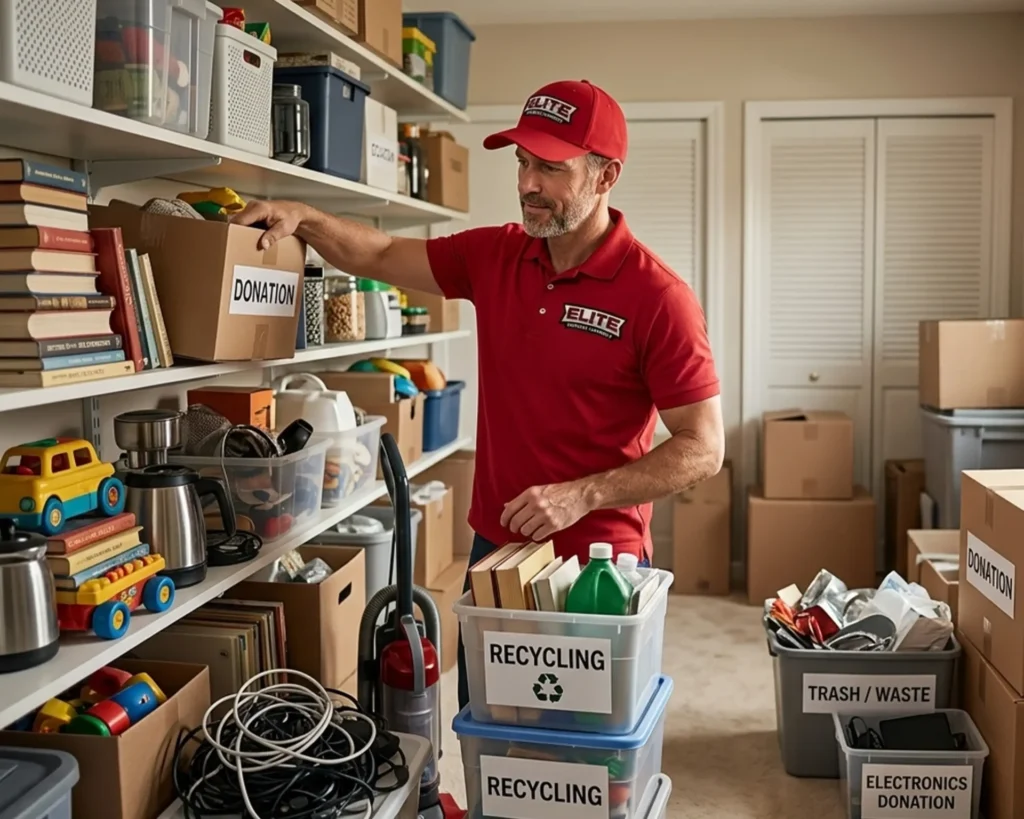
Items no one wants can be donated, recycled or disposed of. Usable furniture and household goods can go to donation centers such as Goodwill or a Habitat for Humanity ReStore. Electronics can go to an e-waste recycler through Texas’s TCEQ electronics recycling programs. Hazardous items such as paint, solvents, pesticides and gasoline need a household hazardous waste drop-off, not a regular trash load. For a full plan, see the storage unit cleanout checklist.
Can a cleanout company handle an inherited storage unit?
Yes. A cleanout company can empty an inherited unit once the person with authority over the estate approves the job, which helps when heirs live out of town. Elite Storage Cleanout handles estate and inherited unit cleanouts in McKinney, Allen, Frisco, Plano and Prosper. The crew can coordinate access directly with the storage facility, so you do not need to be there, and sends before-and-after photos when the job is done. Usable items are donated whenever possible, and the rest is recycled or disposed of responsibly.
Before booking, remove the documents, valuables and keepsakes you want to keep. See typical prices in the storage unit cleanout cost guide.
Frequently asked questions
Can a storage facility sell a deceased person’s belongings?
Yes, if the rent and charges go unpaid. Texas law gives facilities a lien on the unit’s contents for unpaid charges, and they can sell the contents after giving the required notices. Keeping the rent current while the estate is settled prevents this.
Can I clean out a parent’s storage unit if I am not the executor?
Usually not on your own. The facility will want to see that you have legal authority, such as letters testamentary, letters of administration or an approved small estate affidavit. If someone else is the executor, they can authorize you or the cleanout crew to do the work.
How long does it take to get access to an inherited storage unit?
It depends on the paperwork. A small estate affidavit cannot be filed until at least 30 days after the death, and court approval and probate can take longer. Ask the facility early so you know exactly what it needs.
Do I need a lawyer to handle an inherited storage unit?
Not always, but a Texas probate attorney can tell you which process fits the estate and help prepare the documents. This is especially useful if there is a will, several heirs, or valuable property in the unit.
How do I get a quote for clearing an inherited unit?
Call or text (469) 629-7912, 7:00 AM to 11:00 PM, Monday through Sunday, or request a quote on the contact page. Share the unit size, the facility location and roughly how full it is.
Key takeaways
- Contact the storage facility as soon as possible and ask which documents it needs.
- Facilities usually require a death certificate plus letters testamentary, letters of administration or an approved small estate affidavit.
- In Texas, a small estate affidavit applies when there is no will, at least 30 days have passed and the estate is worth $75,000 or less (excluding the homestead and exempt property).
- Keep paying rent, because unpaid charges give the facility a lien and can lead to a sale of the contents.
- Photograph the unit and remove documents, valuables and keepsakes before anything is hauled away.
- A cleanout crew can clear the unit without heirs being present once the estate representative approves.